Suit Fit and Tailoring
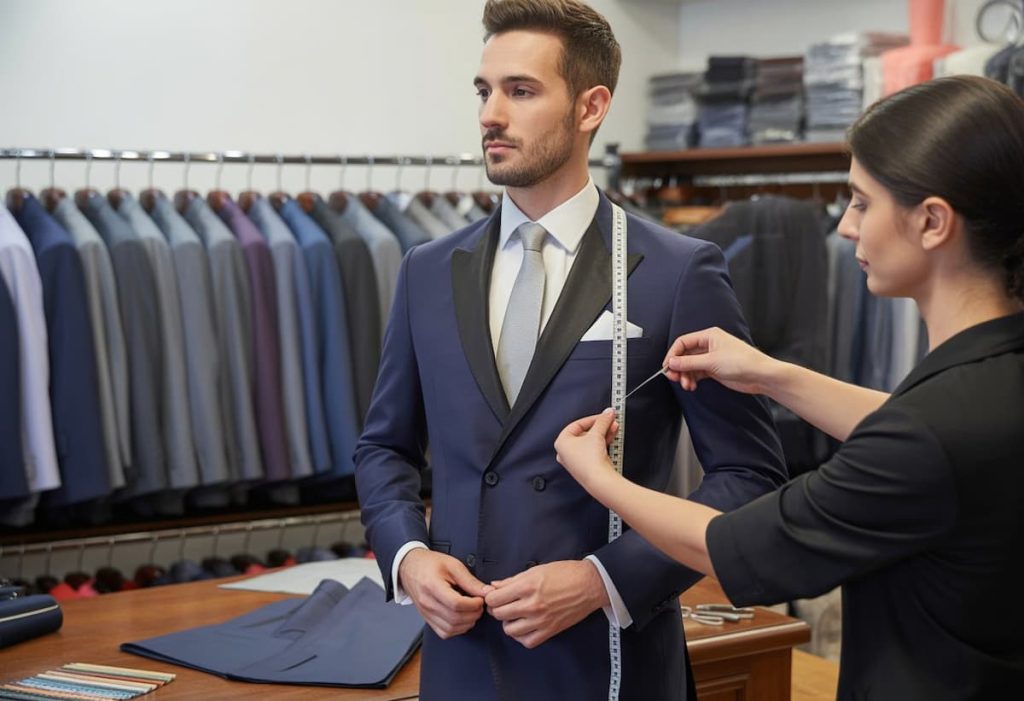
The right fit transforms a wedding suit from acceptable to exceptional. Proper tailoring ensures comfort throughout the ceremony and creates a polished appearance in photos.
Classic Fit
Classic fit suits offer the most traditional silhouette with generous proportions through the chest, waist, and legs. The jacket sits comfortably away from the body with extra room in the shoulders and midsection. This style works well for grooms who prefer freedom of movement or feel restricted in tighter garments.
The trousers feature a fuller cut through the thigh and leg opening. Classic fit typically includes a natural shoulder line without heavy padding. Many grooms choose this option when wearing a three-piece wedding suit with a waistcoat, as the relaxed proportions accommodate the additional layer without pulling or bunching.
This fit suits various body types, particularly those with broader builds or athletic frames. The timeless cut remains appropriate for formal occasions like black-tie weddings requiring a tailcoat or morning suit.
Slim and Tailored Fit
Tailored fit creates a modern silhouette that follows the body’s natural lines without excess fabric. The jacket tapers at the waist while maintaining enough room for comfortable movement. Shoulders align precisely with the wearer’s frame, and sleeves end at the wrist bone.
Tailored suits feature narrower lapels and a shorter jacket length compared to classic styles. The trousers sit closer to the leg with a tapered opening that rests cleanly on dress shoes. This contemporary approach flatters lean builds and creates clean lines in wedding photographs.
Slim fit goes further with tighter measurements throughout. The jacket hugs the torso, and pants feature minimal break at the ankle. This option requires careful attention to mobility when sitting or dancing at receptions.
Custom Tailoring Options
Custom tailoring allows grooms to modify ready-made suits to achieve proper fit. A skilled tailor adjusts sleeve length, jacket waist suppression, trouser hem, and shoulder positioning. These alterations typically cost $150-$400 depending on complexity.
Common adjustments include:
- Taking in or letting out the jacket waist
- Shortening or lengthening sleeves and pant legs
- Adjusting shoulder width and padding
- Modifying button placement
- Altering pocket positions
Tailoring addresses individual proportions that off-the-rack garments miss. Grooms with longer arms, shorter torsos, or uneven shoulders benefit significantly from these modifications. Most alterations require two to three fittings over several weeks to achieve the desired result.
Made-to-Measure vs. Bespoke Suits
Made-to-measure suits start with existing patterns adjusted to individual measurements. A clothier takes detailed measurements and selects from preset pattern blocks. The groom chooses fabric, lining, buttons, and style details. Production occurs in factories using the modified pattern, with costs ranging from $800-$2,500.
This process requires 4-8 weeks and includes one or two fittings for final adjustments. Made-to-measure offers more personalization than off-the-rack options without the premium of full bespoke suits.
Bespoke suits involve creating a completely unique pattern from scratch. A master tailor drafts the pattern based on extensive measurements and multiple fittings. Each component is hand-cut and sewn specifically for the client. The process takes 8-12 weeks minimum and costs $3,000-$10,000 or more.
Bespoke provides unmatched fit quality and addresses specific needs like posture irregularities or significant size differences between upper and lower body. Grooms gain complete control over every design element, from lapel width to pocket style.