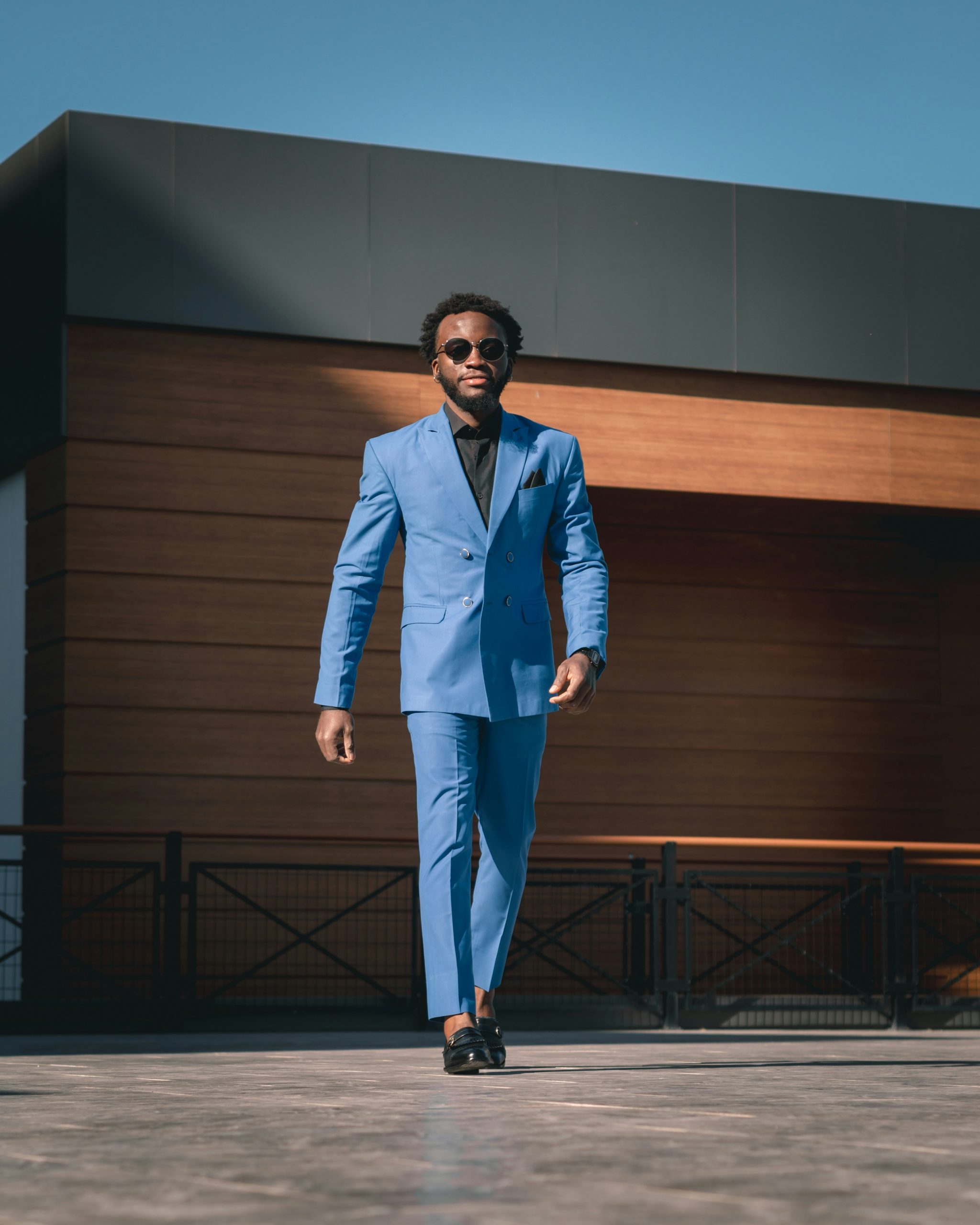
A bespoke suit represents the highest level of tailoring available in menswear. It’s a garment built from scratch to match your exact measurements, style preferences, and body shape. Nothing else in men’s fashion offers the same level of personalization and quality.
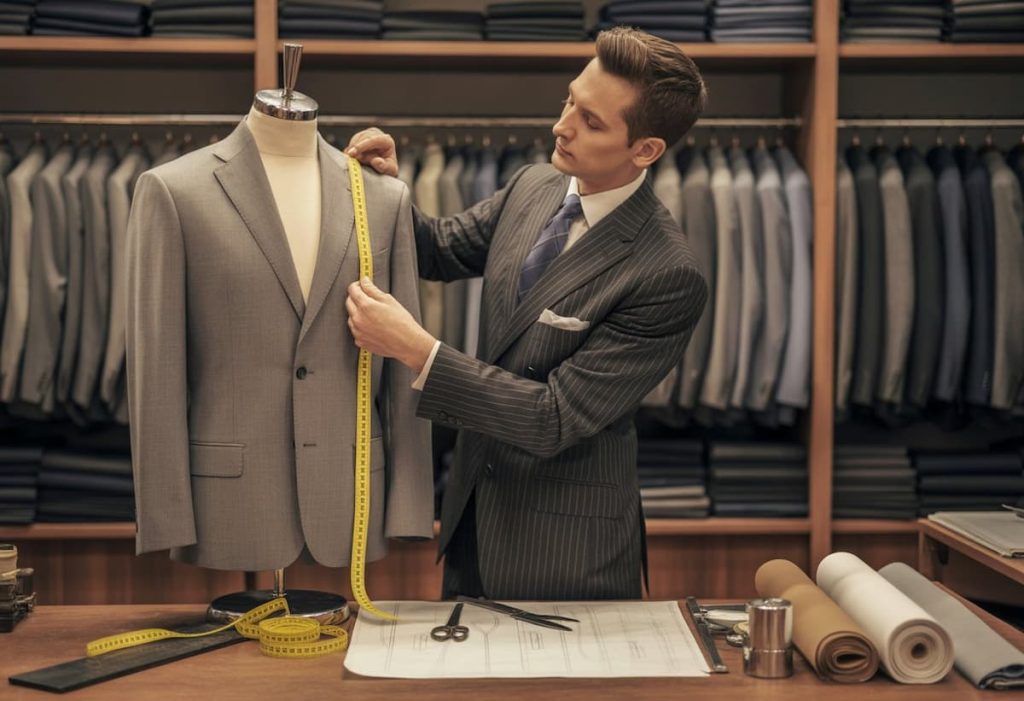
A true bespoke suit requires multiple fittings and takes weeks to complete, but the result is a garment that fits better than anything available off the rack. The process involves selecting fabrics, choosing design details, and working closely with a tailor who crafts each piece by hand. This level of craftsmanship makes bespoke suits popular for important occasions like weddings and events with strict dress codes.
This guide walks through everything needed to understand bespoke tailoring. It covers the differences between custom options, explains the creation process, and shows how to maintain these investment pieces. Whether someone needs wedding suits or wants to elevate their everyday wardrobe, understanding bespoke tailoring helps make informed decisions about men’s fashion.
What Is a Bespoke Suit?
A bespoke suit is a garment crafted entirely from scratch for one individual client. Each piece begins with a blank canvas of fabric and transforms into a unique creation through multiple fittings and adjustments.
The term “bespoke” originated on Savile Row in London, where fabric was “spoken for” by a customer before tailors cut a single thread. True bespoke suits require an original pattern created specifically for the client’s body.
The bespoke experience starts with selecting fabric from hundreds of options. A tailor takes detailed measurements, noting posture quirks, shoulder slopes, and body asymmetries that ready-made clothing ignores.
Bespoke suits differ fundamentally from made-to-measure or custom options. Made-to-measure alters existing patterns. Bespoke creates new patterns entirely.
The process involves three to five fittings over several weeks or months. During each appointment, the tailor refines the fit and makes precise adjustments to achieve sartorial excellence.
Key elements that define authentic bespoke include:
- Hand-cut patterns unique to each client
- Multiple fitting sessions with progressive adjustments
- Handwork throughout construction, especially on buttonholes and lapels
- Floating canvas construction rather than fused materials
- Individual pattern storage for future orders
A custom suit label sometimes creates confusion in the market. Many retailers use this term loosely for made-to-measure services. Genuine bespoke requires significantly more time, skill, and financial investment than other tailoring methods.
The result speaks for itself. A properly fitted bespoke suit moves with the body, drapes naturally, and lasts decades with proper care.
Bespoke vs Made-to-Measure vs Off-the-Rack
When shopping for a suit, buyers encounter three main options. Each differs in construction, fit, and price.
Off-the-rack suits come pre-made in standard sizes. Stores stock these garments ready to purchase. Buyers try on different sizes to find the closest match. Minor adjustments like hemming pants or sleeves might happen after purchase.
Made-to-measure suits start with an existing pattern. A tailor takes the client’s measurements and modifies a base template. The suit gets adjusted in specific areas like sleeve length, chest width, or trouser fit. This approach costs less than bespoke while offering better fit than ready-made options.
Bespoke suits get created from scratch for one person. The tailor drafts a unique pattern based entirely on the client’s measurements and body shape. Multiple fittings occur throughout construction. Every detail gets customized, from fabric choice to button placement.
| Feature | Off-the-Rack | Made-to-Measure | Bespoke |
|---|---|---|---|
| Pattern | Standard | Modified template | Custom created |
| Fittings | None | 1-2 | 3+ |
| Timeline | Same day | 4-6 weeks | 8-12 weeks |
| Price Range | $ | $$ | $$$ |
Made-to-measure suits work well for people with relatively standard proportions who want some personalization. Bespoke suits suit those seeking perfect fit and complete control over design. Off-the-rack suits serve buyers who need quick solutions or have limited budgets.
The construction quality also varies. Bespoke garments feature hand-stitching and floating canvases. Made-to-measure typically uses fused construction with some hand-finishing. Off-the-rack relies heavily on machine production.
The Tailoring Process Step-By-Step
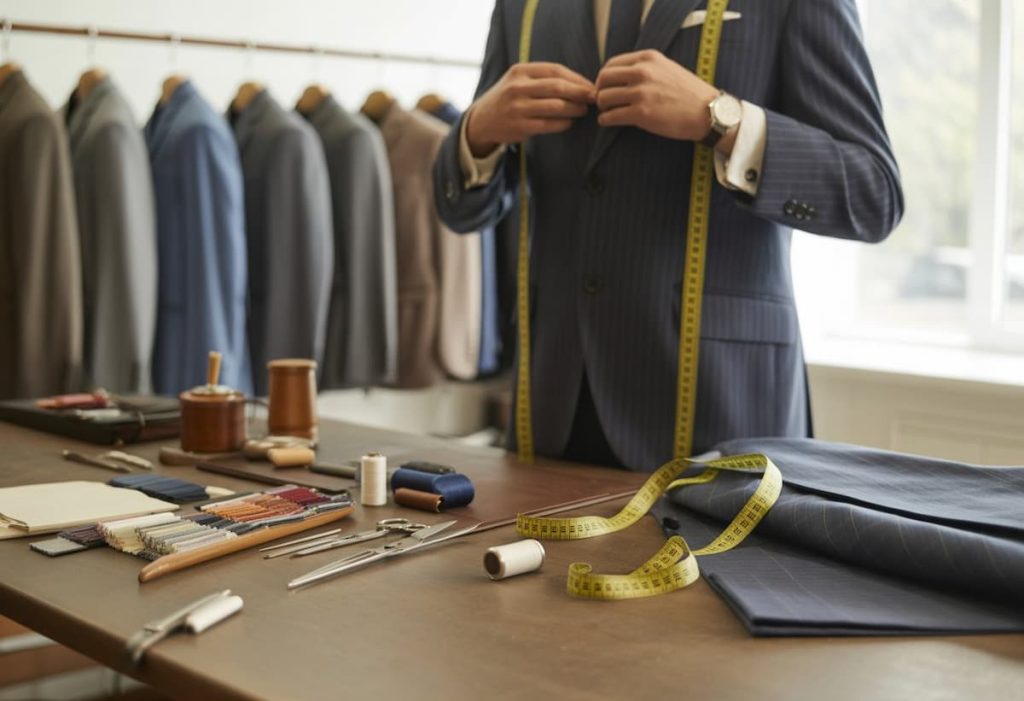
Getting a bespoke suit starts with finding the right tailor. A skilled bespoke tailor will discuss fabric choices, style preferences, and the occasion for wearing the suit.
The first appointment focuses on accurate measurements. Tailors take between 20 to 30 measurements of the body. These include chest, shoulders, waist, hips, arm length, and posture details.
After measurements, the bespoke suit design phase begins. The client selects fabric from sample books and chooses design elements like lapel styles, button choices, and pocket types.
| Step | Timeline | Purpose |
|---|---|---|
| Consultation | Week 1 | Discuss needs and style |
| Measurement | Week 1 | Capture body dimensions |
| Fabric Selection | Week 1-2 | Choose materials |
| First Fitting | Week 3-4 | Check pattern fit |
| Second Fitting | Week 5-6 | Refine adjustments |
| Final Fitting | Week 7-8 | Complete alterations |
The bespoke tailoring process includes multiple fittings. During the first fitting, the client tries on a basic version made from scrap fabric. The tailor marks areas needing adjustment.
A second fitting happens after creating the actual garment. Tailors check sleeve length, trouser breaks, and jacket drape. Minor changes get made at this stage.
The final fitting ensures everything fits perfectly. Custom tailoring requires patience since the entire tailoring process takes six to eight weeks. Each step matters for achieving a suit that fits like no off-the-rack option ever could.
Choosing Your Fabric
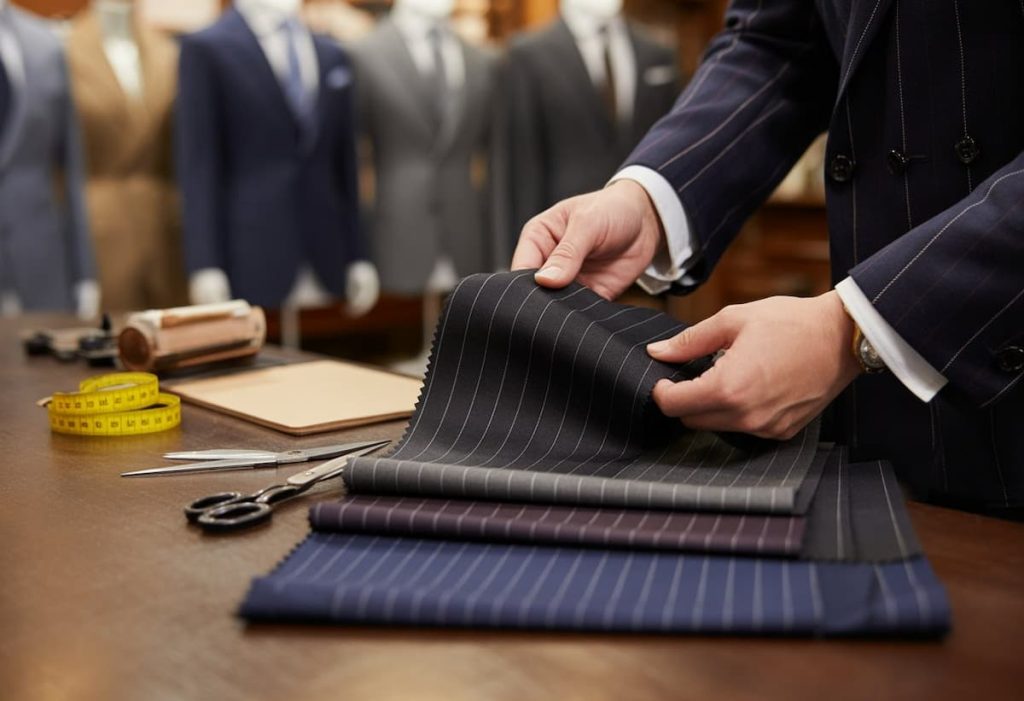
Fabric selection defines the entire suit experience. The material affects comfort, appearance, and longevity.
Premium fabrics come from mills in England, Scotland, and Italy. Italian fabrics lead the market with their superior weave and finish. These materials cost more but deliver exceptional quality that lasts for years.
Weight matters when selecting material. Lightweight fabrics work best for spring and summer, while heavier options suit fall and winter. Most year-round suits use fabric between 9-12 ounces.
Common Fabric Types:
- Wool: The standard choice for business suits, offering durability and wrinkle resistance
- Wool-Silk Blends: Add subtle sheen and softer drape to traditional wool
- Cashmere Blends: Provide extra warmth and luxury feel
- Linen: Perfect for hot weather, though wrinkles easily
Linen suits breathe exceptionally well in warm climates. The natural fiber keeps wearers cool during summer events. However, linen suits crease naturally throughout the day, which some clients prefer for a relaxed aesthetic.
| Fabric Type | Best Season | Wrinkle Resistance | Durability |
|---|---|---|---|
| Wool | Year-round | High | Excellent |
| Linen | Summer | Low | Good |
| Cashmere Blend | Winter | Medium | Very Good |
| Wool-Silk | Spring/Fall | High | Excellent |
Texture influences the suit’s formality level. Smooth finishes appear more formal, while textured weaves create casual looks. Premium fabric mills offer hundreds of patterns, from subtle pinstripes to bold checks.
The right fabric choice depends on climate, occasion, and personal preference. Quality material makes tailoring easier and produces better final results.
Why Fit Matters
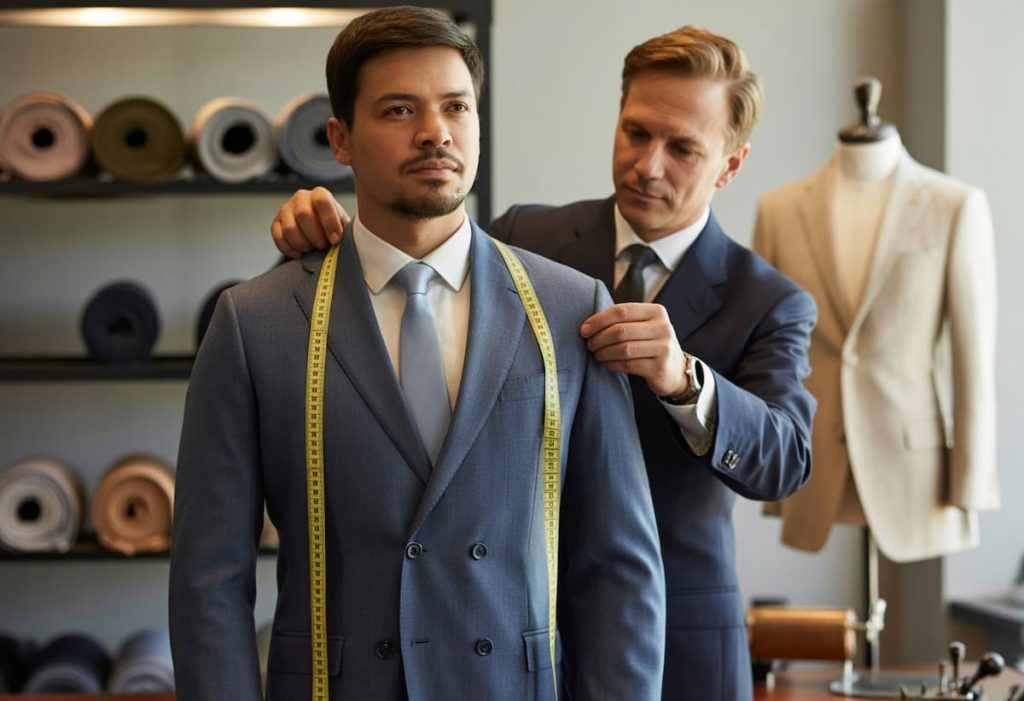
A bespoke suit fit changes everything about how a man presents himself. The difference between off-the-rack and custom tailoring shows immediately in the shoulders, chest, and waist.
When a suit fits correctly, it moves with the body instead of against it. Proper fit means the lapels lay flat, the buttonholes align perfectly, and the pockets sit where they should. Poor fit creates bunching, pulling, and an overall sloppy appearance.
Professional image depends heavily on suit fit. A well-fitted jacket enhances natural proportions while hiding any areas of concern. The right measurements ensure breathability and flexibility throughout the day.
Bespoke suit fit addresses individual body types that ready-made options cannot. One man might need more room in the shoulders while another requires a longer torso. Every body is different.
Lapel styles, vents, and pocket placement all work together to create the perfect fit. These details affect both style and comfort. A suit that feels restrictive limits movement and confidence.
Personal style emerges when fit is right. The wearer can focus on fabric choice, monogramming, and other custom touches instead of worrying about basic construction issues. Suit style becomes an expression rather than a compromise.
The shoulders should sit naturally without extending past the natural line. Sleeve length must reveal a quarter to half inch of shirt cuff. Trouser break should be minimal with modern cuts.
Fit is the foundation that makes everything else possible.
How to Care for Your Bespoke Suit
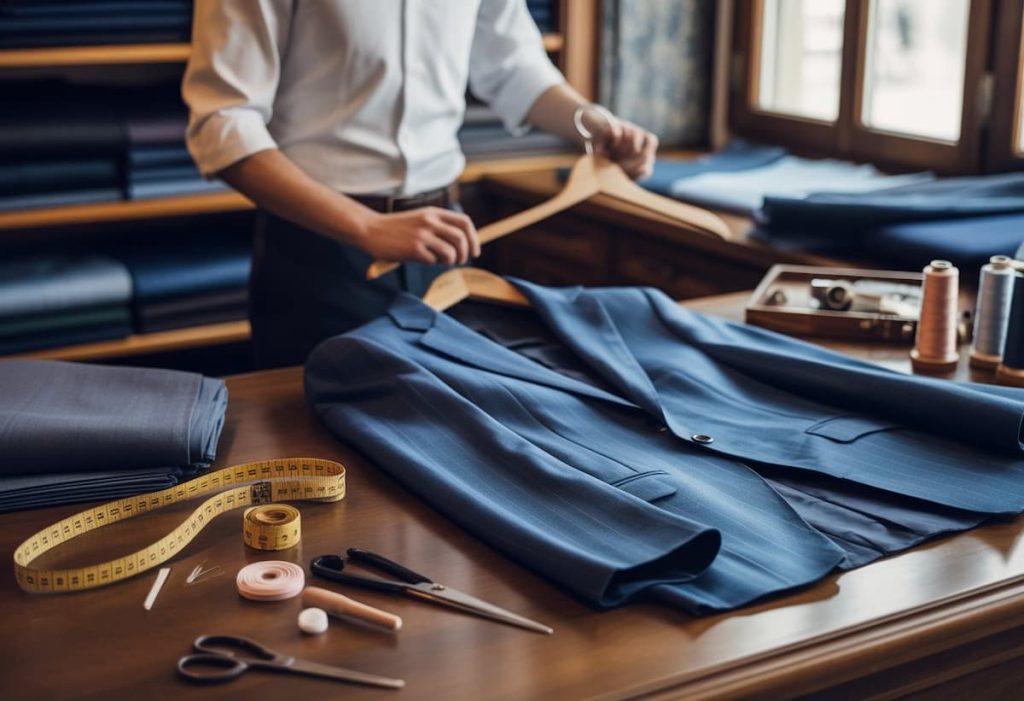
A bespoke suit represents a significant investment. Proper maintenance protects that investment and keeps the garment looking sharp for years.
Brush after each wear. Use a natural bristle brush to remove dust, lint, and surface dirt. Brush in downward strokes, following the fabric’s grain.
Hang properly between wears. A wooden hanger with broad shoulders maintains the jacket’s shape. Never use wire hangers.
Allow rest days. Fabric needs time to recover and release moisture. Rotate between suits instead of wearing the same one daily.
Steam, don’t iron. A handheld steamer removes wrinkles without crushing the fabric. If pressing becomes necessary, use low heat with a pressing cloth between the iron and suit.
Spot clean immediately. Blot spills with a clean cloth—never rub. Water-based stains respond to a damp cloth, while oil-based marks need professional attention.
Limit dry cleaning. Excessive cleaning breaks down natural fibers. Most suits only require professional cleaning two to three times per year. Between cleanings, steaming and brushing handle routine maintenance.
Address alterations promptly. Weight fluctuations or wear patterns may require adjustments. A skilled tailor can modify sleeve length, take in the waist, or adjust trouser hems. These small changes extend the suit’s lifespan.
Store correctly during off-seasons. Use a breathable garment bag in a cool, dry location. Avoid plastic bags that trap moisture and promote mildew growth.
Professional care maintains the precise fit and premium materials that define bespoke tailoring.
Link-Forward Reading & Resources
Readers who want to deepen their knowledge of bespoke tailoring can explore several trusted resources. Books like Dressing the Man by Alan Flusser provide detailed guidance on fit and fabric selection. Industry publications such as Savile Row Style offer insights into traditional craftsmanship techniques.
Professional organizations maintain valuable information for those serious about custom clothing. The Custom Tailors and Designers Association publishes standards and best practices. The British Bespoke Council documents authentic hand-tailoring methods passed down through generations.
Online platforms now complement traditional learning sources. Fashion institutes like Parsons School of Design and Central Saint Martins offer courses in pattern-making and garment construction. These programs teach the technical skills behind quality suits.
Fabric mills provide educational content about textile production:
- Vitale Barberis Canonico explains wool grades and weaving processes
- Dormeuil showcases innovative fabric technologies
- Holland & Sherry details the differences between seasonal cloths
Trade shows present opportunities to examine fabrics and construction methods firsthand. Pitti Uomo in Florence and MRket in New York bring together tailors, fabric suppliers, and designers. These events reveal current trends before they reach mainstream markets.
Museums preserve historical examples of fine tailoring. The Victoria and Albert Museum in London and the Metropolitan Museum of Art in New York both maintain extensive costume collections. Studying vintage garments reveals construction techniques rarely used today.
Frequently Asked Questions
Bespoke suit cost varies widely based on fabric choice, tailor expertise, and construction methods. A true bespoke suit requires precise measurements and differs significantly from off-the-rack alternatives.
What factors influence the cost of a bespoke suit?
Fabric selection plays the largest role in determining price. Premium wool from mills like Scabia or Loro Piana costs significantly more than standard materials.
The tailor’s experience and reputation affect pricing directly. Master tailors with decades of experience charge higher rates for their expertise and precision.
Construction methods impact the final bespoke suit cost. Hand-stitched canvassing takes more time than fused construction, which increases labor costs. The number of fittings also influences price, as most bespoke suits require three to five sessions.
What is the difference between a bespoke suit and a tailored suit?
A bespoke suit starts from scratch with a unique paper pattern created specifically for one client. Tailors cut each piece by hand and construct the garment through multiple fittings.
Tailored suits begin with existing patterns that get adjusted to fit individual measurements. These suits offer some customization but lack the complete personalization of bespoke work. Made-to-measure suits fall into this category.
The construction process differs entirely. Bespoke requires 50 to 80 hours of handwork, while tailored suits use more machine stitching and standardized techniques.
How should one go about purchasing a tailored suit?
Start by researching local tailors and reviewing their portfolios. Look for consistent quality in their finished work and read client testimonials.
Schedule an initial consultation to discuss style preferences and budget. This meeting allows clients to assess the tailor’s communication style and expertise. Bring inspiration photos or examples of preferred looks.
Plan for multiple fittings over several weeks or months. The first fitting checks overall proportions, while subsequent sessions refine details like sleeve length and trouser break.
What are the price expectations when investing in a men’s bespoke suit?
Entry-level bespoke suits typically start around $3,000 to $5,000 in North America. These suits use quality fabrics and solid construction techniques from skilled tailors.
Mid-range options fall between $5,000 and $10,000. These suits feature superior fabrics, more hand-finishing work, and often come from established tailoring houses.
High-end bespoke suits exceed $10,000 and can reach $20,000 or more. These garments use the finest materials available and involve extensive handwork from master craftsmen. The bespoke suit cost at this level reflects exceptional quality and exclusivity.
What are the essential measurements needed for a proper bespoke suit fitting?
Tailors measure the chest at its fullest point and the natural waist where trousers typically sit. Shoulder width gets measured from point to point across the back.
Sleeve length runs from the shoulder seam to the wrist bone. Back length measures from the base of the neck to the natural waist. Inseam and outseam measurements determine proper trouser length.
Additional measurements include neck circumference, hip width, and thigh circumference. Posture assessment matters too, as some clients have sloped shoulders or uneven hips. Tailors take 20 to 30 measurements for a complete bespoke pattern.
What should someone look for in a quality bespoke suit?
Hand-stitched lapels indicate superior construction. The stitching should feel soft and flexible, not stiff or rigid.
Check the interior for a floating canvas that moves independently from the outer fabric. This canvas shapes the jacket and improves how it drapes on the body. Look for clean finished seams with no loose threads.
The collar should hug the neck without gaps when buttoned. Sleeves need to show a quarter to half inch of shirt cuff. Trouser length should create a slight break at the shoe without excessive fabric pooling.